Seba.Health
Key Takeaways
- Rilke argues that the inner life is a vocation requiring the same discipline and solitude as any craft — that creative and psychological development depend on the willingness to remain alone with what has not yet been understood.
- The instruction to 'live the questions' — to resist premature resolution and inhabit uncertainty as a practice — anticipates the Jungian concept of holding the tension of opposites and the Bionian capacity for negative capability.
- Rilke treats feeling not as decoration or symptom but as the primary organ of knowledge, aligning with the depth-psychological claim that the feeling function is a mode of orientation rather than a disturbance to be managed.
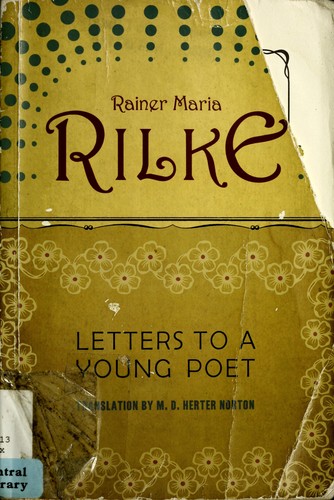
Between 1903 and 1908, Rainer Maria Rilke wrote ten letters to Franz Xaver Kappus, a young student at the military academy where Rilke himself had once suffered. Kappus had written to ask whether his poems were any good. Rilke refused to answer that question. Instead, he answered a different one, a question Kappus had not yet learned to ask, about what it means to take the inner life seriously enough to build an existence around it. The resulting correspondence, published posthumously in 1929, is the most concentrated articulation of interiority as discipline that the Western tradition possesses. It is not a psychology text. It is the thing that psychology texts attempt to formalize, delivered without apparatus, in the voice of a man who had staked everything on the proposition that feeling is a form of knowledge.
The Necessity of Solitude
Rilke’s first and most persistent instruction to Kappus is that creative life, and by extension, the life of the psyche, requires solitude. Not loneliness, which is a deficit, but solitude: a chosen condition of receptive aloneness in which the inner world can speak without competition from external validation. Rilke tells Kappus to stop asking others whether his work is good. The question itself is a betrayal of the work, because it places the locus of authority outside the self. “Nobody can counsel and help you, nobody,” Rilke writes. “There is only one single way. Go into yourself” (Rilke, 1929).
Rilke is describing a structural requirement of psychic development — one that the Jungian tradition would later formalize as the withdrawal of projections. As long as the individual seeks confirmation from external authorities, the inner life remains undifferentiated, a mass of borrowed opinions and received images. Solitude is the condition in which those borrowed elements fall away and the psyche’s own voice becomes audible. The analysand who fills every silence with chatter, the patient who cannot tolerate ten seconds without a screen, the addict who reaches for the substance at the first tremor of emptiness — each is refusing the solitude that Rilke identifies as the prerequisite for all genuine inner work.
The therapeutic traditions have their own language for this. Winnicott called it the capacity to be alone — a developmental achievement rooted in the early experience of being alone in the presence of the mother. Bion described the analyst’s state of mind as one of “without memory or desire,” a disciplined emptiness that allows the patient’s material to arrive without preemptive interpretation (Bion, 1970). Rilke, writing decades before either of them, grasped the principle with a poet’s precision: the inner life does not reveal itself to the busy or the distracted. It reveals itself to the one who waits.
Living the Questions
The most frequently quoted passage in the Letters is also its most psychologically demanding. “I would like to beg you, dear Sir, as well as I can, to have patience with everything unresolved in your heart and to try to love the questions themselves as if they were locked rooms or books written in a very foreign language.” Rilke instructs Kappus not to seek answers but to live his way into them, to inhabit the uncertainty rather than resolve it prematurely. “Do not now seek the answers, which cannot be given you because you would not be able to live them. And the point is, to live everything. Live the questions now” (Rilke, 1929).
This instruction maps with extraordinary precision onto Jung’s concept of holding the tension of opposites — the insistence that the psyche generates new life through the sustained endurance of conflict rather than its resolution. The transcendent function, Jung’s term for the process by which consciousness and the unconscious produce a third position that supersedes both, requires exactly the patience Rilke describes: a refusal to collapse the tension prematurely by choosing one side. The ego wants answers. The psyche produces them only when the ego has learned to wait (Jung, 1971).
In clinical practice, this capacity is the fulcrum of transformation. The addict collapses the tension of craving by using. The anxious patient collapses the tension of uncertainty by seeking reassurance. The depressed patient collapses it by withdrawing into numbness. Each of these is a premature answer — a flight from the question that the psyche is trying to pose. Rilke’s instruction is not a platitude about patience. It is a description of the exact psychological posture that makes transformation possible: remaining present to what is unresolved without acting to dissolve it.
Feeling as Organ of Knowledge
Running through all ten letters is an argument that Rilke never states in systematic form but that structures every piece of advice he offers: feeling is not a byproduct of experience but its primary instrument. When Rilke tells Kappus to go into himself, the direction of travel is not toward thought or analysis but toward feeling, toward the body’s own registration of what is true. When he speaks of solitude, the content of that solitude is affective: what arrives when external noise ceases is not ideas but emotions, sensations, images, the raw material of the psyche’s speech.
This alignment of feeling with knowledge, rather than with irrationality, pathology, or mere decoration, places Rilke squarely within the tradition that Jung formalized in Psychological Types. Jung identified feeling as one of the four functions of consciousness, coordinate with thinking, sensation, and intuition. Feeling, for Jung, is a rational function: it evaluates experience according to values, assigning weight, worth, and meaning. It is not opposed to knowledge but constitutive of it. A person whose feeling function is developed knows things that the thinking function alone cannot access — because it operates on a different register of information, one grounded in the body’s interoceptive signals rather than in abstract cognition (Jung, 1971).
Rilke understood this without the typological framework. His instruction to Kappus amounts to a single imperative: trust what you feel, not as caprice but as intelligence. The sadness, the fear, the longing, the unnamed stirring that arrives in the middle of the night — these are communications to be received. They are the psyche’s own voice, speaking in the language of the body, and the task of the inner life is to develop the capacity to hear them without flinching.
Why This Book Belongs on the Awe and Beauty Shelf
Letters to a Young Poet belongs on this shelf because it articulates the subjective posture that awe requires. Keltner can measure the vagal response. Campbell can map the hero’s descent. Huxley can describe the reducing valve. But Rilke names the inner condition without which none of these encounters bears fruit: the willingness to remain alone with what is vast, unresolved, and not yet understood. Awe is not a spectacle to be consumed. It is a threshold to be inhabited, and inhabiting it demands the solitude, patience, and fidelity to feeling that Rilke spent ten letters trying to teach a young man who wanted, more than anything, to be told he was doing it right. The Seba framework’s insistence that the feeling function is a mode of orientation — the body’s own instrument of knowledge, finds in Rilke its most eloquent advocate, writing decades before the neuroscience of interoception confirmed what he already knew: that the way in is through what you feel (Rilke, 1929).
Sources Cited
- Rilke, R. M. (1929). Letters to a Young Poet. (M. D. Herter Norton, Trans.). W. W. Norton, 1934. ISBN 978-0-393-31039-0.
- Jung, C. G. (1971). Psychological Types (CW 6). Princeton University Press.
- Bion, W. R. (1970). Attention and Interpretation. Tavistock Publications.