Seba.Health
Key Takeaways
- Huxley proposes that the brain functions as a 'reducing valve' — a mechanism of exclusion that filters the totality of available consciousness down to the thin stream necessary for biological survival.
- The mescaline experiment reveals perception stripped of utilitarian filtering: objects become saturated with significance, color deepens into something approaching the numinous, and the ordinary world discloses its inexhaustible particularity.
- The reducing valve hypothesis anticipates contemporary neuroscience's finding that psychedelics reduce default mode network activity — the brain does not hallucinate by adding noise but by releasing the constraints that normally suppress broader awareness.
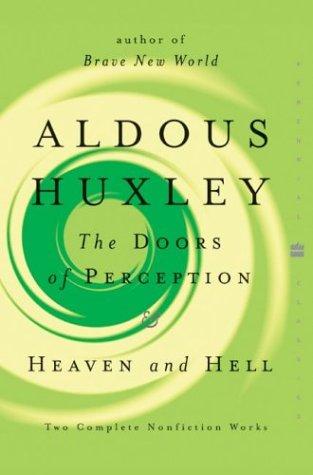
On a bright morning in May 1953, Aldous Huxley swallowed four-tenths of a gram of mescaline dissolved in water, sat down in his study in the Hollywood Hills, and waited for his ordinary consciousness to come apart. What happened next, an encounter with the inexhaustible depth of a vase of flowers, the folds of his trousers, the grain of a wooden chair, produced a ninety-page document that has shaped every serious conversation about consciousness, perception, and the nature of the mind since its publication. The Doors of Perception is not a drug memoir. It is a philosophical argument about the architecture of awareness, and its central claim has proven more durable than Huxley could have anticipated: the brain is not a production facility for consciousness but a filtration system that restricts it.
The Reducing Valve
The hypothesis that organizes the entire book is borrowed from the Cambridge philosopher C. D. Broad, who proposed that the function of the brain and nervous system is eliminative rather than productive. The brain does not generate mind. It narrows it. Huxley adopts this framework and sharpens it into a single image: the brain operates as a “reducing valve,” admitting only the trickle of awareness necessary for survival on the surface of a particular planet at a particular time. Everything else, the full spectrum of consciousness available to Mind at Large, is excluded, not because it does not exist but because it is biologically irrelevant (Huxley, 1954).
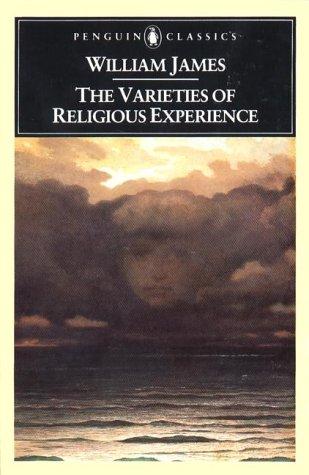
This is an extraordinary claim, and Huxley knew it. He also knew that it was not new. William James had argued in The Varieties of Religious Experience that the normal waking consciousness is but one special type of consciousness, separated by the filmiest of screens from entirely different forms of awareness. Henri Bergson had proposed that the brain’s function is to channel attention rather than to create experience. What Huxley added to this lineage was the testimony of his own nervous system under chemical intervention — testimony that the reducing valve could be opened.
Under mescaline, the utilitarian categories that organize ordinary perception dissolved. Huxley looked at a vase of flowers and saw not “flowers,” not the abstracted concept that the brain files under the label for quick reference, but the particular, unrepeatable suchness of these petals, this light, this exact arrangement of color and form. The Platonic universal gave way to the Aristotelian particular, and the particular turned out to be saturated with a significance that the reducing valve normally suppresses. What Huxley called “the sacramental vision of reality” was not an addition to perception but a subtraction of the filters that prevent it.
Perception as Exclusion
The implications of the reducing valve hypothesis extend far beyond the pharmacology of mescaline. If the brain’s primary function is to narrow consciousness rather than to produce it, then every theory of mind that begins with the brain as a generator of experience starts in the wrong place. The hard problem of consciousness, how does neural firing produce subjective experience?, dissolves if the question is reframed: how does the brain select from a field of awareness that precedes it?
Contemporary neuroscience has arrived at a version of this insight through entirely independent means. Robin Carhart-Harris and his team at Imperial College London demonstrated that psilocybin, a compound pharmacologically related to mescaline, does not increase brain activity but decreases it, specifically in the default mode network, the system responsible for self-referential processing, temporal narrative, and the maintenance of ego boundaries (Carhart-Harris et al., 2012). The psychedelic state, on this evidence, is not the brain generating visions. It is the brain releasing the constraints that normally prevent wider perception from reaching awareness.
Huxley had no fMRI data. He had a vase of flowers and the testimony of his own senses. That his phenomenological report and Carhart-Harris’s neuroimaging data converge on the same structural claim — that expanded awareness results from reduced filtering rather than increased production, is one of the more striking confirmations in modern consciousness research. The reducing valve hypothesis is not metaphor. It describes a measurable mechanism.
What the Open Valve Reveals
Huxley is careful to distinguish between the content of the mescaline experience and its implications. The content (the overwhelming beauty of flowers, the cosmic significance of fabric folds, the terrifying depth of a chair leg) is specific to the compound and the occasion. The implications are structural. If ordinary consciousness is a constriction, then the experiences that religious traditions call “mystical”, and that psychology calls “peak” or “transpersonal”, are not departures from reality but approaches toward it. The mystic and the mescaline subject are not hallucinating. They are perceiving with less filtration than the rest of us.
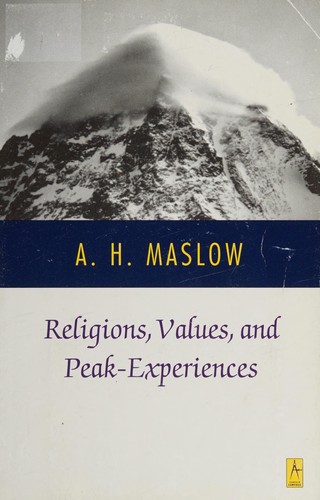
This argument places Huxley in direct alignment with the tradition that runs from William James through Rudolf Otto to Abraham Maslow. James identified mystical states as noetic — they carry the felt quality of knowledge, of something learned rather than imagined. Otto described the encounter with the numinous as a confrontation with the mysterium tremendum, something wholly other that commands awe and surrender. Maslow would later argue that peak experiences are natural functions of the healthy organism, suppressed by institutional orthodoxy. Huxley’s contribution is to locate the mechanism of suppression in the nervous system itself. The institutions that domesticate mystical experience are secondary filters; the primary filter is biological.
For the question that organizes this library — how consciousness, interoception, and the feeling function converge in the work of transformation, Huxley’s insight is foundational. The interoceptive system is itself a filtering mechanism, delivering to awareness only those signals from the body’s interior that the brain deems relevant to homeostasis. The addicted nervous system narrows that filter further still, reducing the body’s signal repertoire to a single demand. Recovery, on this reading, is not the addition of new capacities but the restoration of perceptual bandwidth that was always there and was progressively constricted. The reducing valve, tightened by trauma, addiction, and the metabolic demands of survival, can be reopened — and the first step toward reopening it is recognizing that it exists.
Why This Book Belongs on the Awe and Beauty Shelf
The Doors of Perception belongs here because it provides the perceptual theory that the other books on this shelf require. Keltner measures what awe does to the body. Otto describes what the numinous feels like from the inside. Maslow maps its occurrence in the healthy personality. Huxley explains why it is normally absent — and what has to change in the nervous system for it to return. The reducing valve hypothesis is the connective tissue between neuroscience and phenomenology, between the vagus nerve and the vision of the sacred. It names the mechanism that addiction tightens and that depth work aims to release: the brain’s own gatekeeping of how much reality a person is permitted to perceive (Huxley, 1954).
Sources Cited
- Huxley, A. (1954). The Doors of Perception. Chatto & Windus. ISBN 978-0-06-059518-2.
- Carhart-Harris, R. L., Erritzoe, D., Williams, T., Stone, J. M., Reed, L. J., Colasanti, A., ... & Nutt, D. J. (2012). Neural correlates of the psychedelic state as determined by fMRI studies with psilocybin. Proceedings of the National Academy of Sciences, 109(6), 2138–2143.
- James, W. (1902). The Varieties of Religious Experience: A Study in Human Nature. Longmans, Green.