Seba.Health
Key Takeaways
- Campbell identifies a universal pattern — the monomyth — structuring heroic narratives across cultures: departure from the known world, descent into ordeal, and return with transformative knowledge.
- The hero's journey is not a literary convention but a psychological process: the ego's necessary encounter with unconscious forces, its symbolic death, and its reconstitution at a higher level of integration.
- Campbell's synthesis, despite decades of popularization and oversimplification, provides the structural grammar for understanding why transformation requires passage through suffering — the foundational logic of both individuation and recovery.
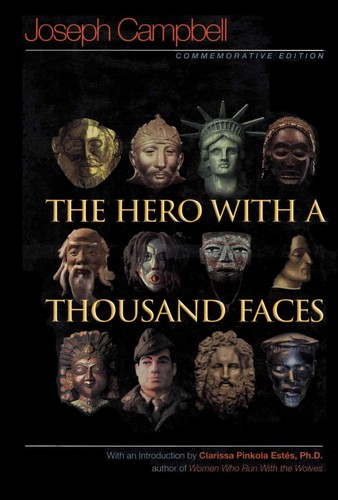
Joseph Campbell published The Hero with a Thousand Faces in 1949, drawing on a lifetime of immersion in world mythology and a deep engagement with Jungian analytical psychology. The book argues that the heroic narratives of every culture — Greek, Hindu, Buddhist, Native American, Polynesian, Celtic, Egyptian, follow a single structural pattern, which Campbell calls the monomyth. The hero departs from the known world, crosses a threshold into the realm of supernatural forces, endures an ordeal that transforms the structure of the self, and returns bearing a gift that renews the community. Campbell’s claim is not that these stories resemble one another. His claim is that they are the same story, told in a thousand local dialects, because they describe a process native to the human psyche itself.
The Architecture of the Monomyth
Campbell divides the hero’s journey into three major movements: Departure, Initiation, and Return. Each contains a sequence of characteristic stages: the call to adventure, the refusal of the call, the crossing of the first threshold, the belly of the whale, the road of trials, the meeting with the goddess, the atonement with the father, the apotheosis, the ultimate boon, and the return crossing. The precision of this sequence is what distinguishes Campbell’s work from earlier comparative mythology. He is not collecting analogies. He is mapping a structure, and the structure proves remarkably stable across cultures separated by thousands of miles and thousands of years (Campbell, 1949).
The departure phase centers on the disruption of ordinary life. Something summons the hero out of the familiar world: a crisis, a vision, a wound, a loss. The call is often refused, because the ego recognizes that answering it will require the dissolution of everything it has built. The threshold crossing that follows is not a geographical event but a psychological one: the hero leaves the territory governed by the ego’s defensive structures and enters a domain where those structures no longer function. Campbell borrows the language of depth psychology deliberately. The threshold is the boundary between consciousness and the unconscious, and what lies beyond it is not chaos but a different order of reality, one governed by archetypal forces that the ego cannot control.
The Descent as Psychological Necessity
The initiation phase is where the monomyth becomes directly relevant to clinical work. The road of trials is a series of encounters with forces that exceed the hero’s current capacity — monsters, temptations, impossible tasks. They are the projections of psychic contents that the ego has refused to integrate: shadow material, repressed affects, unlived aspects of the personality. The hero does not defeat these forces by overpowering them. In the most psychologically sophisticated versions of the myth, the hero defeats them by being transformed through the encounter. The sword that slays the dragon is forged in the dragon’s own fire.
Erich Neumann, in The Origins and History of Consciousness, develops the developmental psychology that undergirds Campbell’s mythological framework. Neumann traces the evolution of consciousness from its original containment in the maternal unconscious through a series of archetypal stages — the uroboros, the Great Mother, the separation of the World Parents, the dragon fight, each of which corresponds to a phase in the ego’s differentiation from the unconscious (Neumann, 1954). Campbell’s monomyth is the narrative form of Neumann’s developmental sequence. The hero’s journey is the story consciousness tells about its own emergence, and the descent into ordeal is not a detour but the mechanism by which that emergence occurs.
This is the point that popularization has obscured. The Hollywood version of the hero’s journey, the version filtered through screenwriting manuals and franchise storytelling, treats the descent as a dramatic obstacle between the hero’s initial situation and the triumphant return. Campbell’s argument is deeper and more demanding. The descent is the transformation. There is no return without the death of the hero’s prior self, and that death is not metaphorical. The ego structure that entered the underworld does not survive the crossing. What returns is a reconstituted self, organized around a center that the ego no longer claims as its own. Jung called this center the Self. Campbell called it the boon. The Twelve Steps call it a higher power. The structural claim is identical across all three frameworks: lasting transformation requires the ego’s encounter with something that exceeds it, and that encounter is experienced as annihilation before it is experienced as renewal.
The Return and the Problem of Integration
The third movement of the monomyth, the Return, receives less attention than it deserves, and Campbell devotes some of his most penetrating analysis to its difficulties. The hero who has undergone apotheosis and received the ultimate boon must now cross back into the ordinary world and communicate what was learned. This is never simple. The knowledge gained in the underworld operates according to a different logic than the ego-consciousness of the waking world, and the returning hero often finds that the boon cannot be translated into the language of the community. The result is a characteristic tension between the visionary and the social, between the depth of the transformative experience and the shallowness of the structures available to receive it.
This tension is immediately recognizable in clinical practice. The recovering addict who has undergone a profound transformation in treatment — who has encountered the depths of personal suffering and emerged with a fundamentally different relationship to the self — returns to a social world that has no framework for what happened. The language available is either clinical (“You have a disease”) or spiritual (“You found God”), and neither captures the structural reorganization that occurred. Campbell’s analysis of the Return provides a mythological grammar for this clinical problem: the difficulty is not that the transformation was incomplete but that the ordinary world lacks the symbolic infrastructure to hold it.
Why This Book Belongs on the Awe and Beauty Shelf
The monomyth belongs on the awe and beauty shelf because awe is the emotional signature of the threshold crossing. Every version of the hero’s journey includes a moment when the ordinary categories of perception shatter and something vastly larger comes into view — the tremendum that Otto identified, the peak experience that Maslow described, the reducing valve opening that Huxley reported. Campbell constructs the narrative architecture for these encounters: they are not random irruptions of the sacred but stages in a structured process of psychological transformation. The hero’s journey is the story the psyche tells about what happens when awe is not merely felt but followed — when the encounter with the numinous is allowed to dismantle the ego’s fortifications and reorganize the self around a deeper center. For the Seba framework, which holds that awe-based stabilization is a mechanism of recovery, Campbell’s monomyth supplies the map: departure from the defended self, descent into the body’s own underworld, and return with a capacity for feeling that addiction had sealed shut (Campbell, 1949).
Sources Cited
- Campbell, J. (1949). The Hero with a Thousand Faces. Pantheon Books. ISBN 978-1-57731-593-3.
- Neumann, E. (1954). The Origins and History of Consciousness (R. F. C. Hull, Trans.). Princeton University Press.
- Jung, C. G. (1968). The Archetypes and the Collective Unconscious (CW 9i). Princeton University Press.