Seba.Health
Key Takeaways
- Jaynes argues that Homeric heroes did not possess subjective consciousness — the 'voices of the gods' were auditory hallucinations generated by the right hemisphere and obeyed without reflective mediation.
- The bicameral thesis, whatever its empirical status, forces a confrontation with the possibility that pre-subjective modes of cognition were not primitive but structurally different from modern consciousness.
- Jaynes's framework provides a neurological complement to Snell's philological argument and deepens the case that thumos represents an embodied, non-reflective mode of knowing.
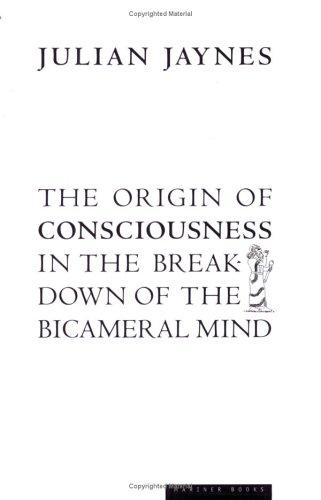
Julian Jaynes’s The Origin of Consciousness in the Breakdown of the Bicameral Mind is one of those books that serious scholars have been trying to dismiss for fifty years without success. The thesis is outrageous: that human beings as recently as three thousand years ago did not possess subjective consciousness; that the characters of the Iliad did not experience an interior monologue, did not introspect, did not “decide” in any modern sense of the word; that the voices they attributed to gods were literal auditory hallucinations generated by the right temporal lobe and transmitted to the left hemisphere’s language centers, where they were obeyed without question. The thesis is almost certainly wrong in its specifics. It is indispensable in what it forces the reader to confront.
The Bicameral Architecture
Jaynes’s argument rests on a reading of the Iliad that takes Homer’s phenomenological descriptions at face value. When Achilles hears Athena’s voice telling him not to draw his sword, Jaynes insists that this is not a literary convention, not a metaphor for internal deliberation, and not a religious belief about divine intervention. It is a report of auditory experience. Achilles heard a voice. The voice originated not from a goddess but from the right hemisphere of his own brain, a region that in the bicameral era functioned as an autonomous command center, issuing directives in the form of hallucinated speech during moments of stress or novel decision-making. The left hemisphere, the linguistic, analytical, sequential processor, received and executed these commands without the mediating layer of self-awareness that modern consciousness provides.
The “bicameral mind” is Jaynes’s term for this architecture: two chambers operating in coordination but without the integrative self-awareness that would allow the individual to recognize the voice as his own. The breakdown of this system, triggered by the social upheavals of the late Bronze Age, forced the development of subjective consciousness as a substitute for the divine command structure. Once the voices fell silent, or became unreliable, human beings had to learn to deliberate, to weigh options, to construct an internal narrative space in which alternative actions could be modeled and compared. Consciousness, in Jaynes’s account, is not a biological given but a cultural technology, a learned mode of interior operation that replaced a more ancient system.
Where Jaynes Meets Thumos
The value of Jaynes’s framework for the study of thumos lies not in his specific neurological claims but in the phenomenological seriousness with which he treats Homeric experience. Jaynes and Snell arrive at the same conclusion by different routes: Homeric characters did not possess the kind of interiority that modern readers assume. Snell demonstrates this philologically, through the absence of unified psychological vocabulary. Jaynes demonstrates it neurologically, through a model of brain organization that produces action without reflection. Both point toward the same territory: a mode of human experience in which the body’s responses, what Homer calls thumos, operate as the primary guidance system, unmediated by the reflexive self-awareness that modern consciousness places between sensation and action.
This is the connection that matters for depth psychology. If thumos is the organ through which Homeric characters registered evaluative significance — danger, desire, grief, the pull of honor, the weight of obligation — and if that registration occurred without passing through a reflective subject, then thumos represents a form of intelligence that is pre-subjective but not pre-intelligent. The feeling function, in Jung’s typology, operates in exactly this register: it evaluates before the ego deliberates, delivering verdicts about the worth and meaning of experience that arrive as felt certainties rather than as conclusions of argument. Jaynes’s bicameral model suggests that this mode of operation was once the dominant form of human cognition, not a subordinate function waiting to be supervised by thinking.
The Controversy and Its Productive Core
Jaynes has been criticized from every direction. Neuroscientists object that lateralization is more complex than his two-chamber model allows. Classicists argue that he reads Homer too literally, ignoring the conventions of oral-formulaic composition. Philosophers note that his definition of consciousness is idiosyncratic, conflating subjective experience with introspective self-awareness in a way that may not be philosophically coherent. These criticisms have weight. The bicameral mind as Jaynes described it — a specific neuroanatomical arrangement producing auditory hallucinations — has not been empirically confirmed.
And yet the book persists. It persists because the central provocation cannot be easily neutralized: the possibility that the inner life of ancient human beings was organized along fundamentally different lines than our own. Not less complex, not less functional, but different in structure — operating through somatic registration, divine imperative, and embodied habit rather than through the introspective narrative that modern subjects experience as the self. This possibility is not speculation. It is supported by the philological evidence that Snell and Onians amassed, by the anthropological record of voice-hearing in non-Western cultures, and by the clinical observation that modern subjects in dissociative states report experiences strikingly similar to what Jaynes describes: autonomous voices, loss of executive control, action without the felt sense of agency.
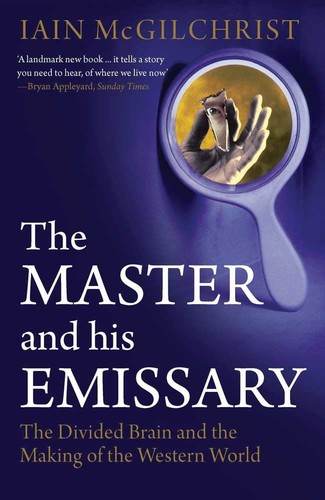
Iain McGilchrist’s The Master and His Emissary offers the most sophisticated contemporary update of Jaynes’s hemispheric thesis, arguing that the right hemisphere’s mode of attention — holistic, embodied, contextual, alive to the living presence of things — has been progressively marginalized by the left hemisphere’s drive toward abstraction and control. McGilchrist’s argument is more nuanced than Jaynes’s, but it shares the same fundamental commitment: that the modern form of consciousness is not the only form, and that what was lost in its emergence deserves recovery rather than dismissal.
The Depth-Psychological Implication
For clinical practice, Jaynes’s legacy reduces to a single operational insight: the reflexive, narrating self that sits at the center of modern consciousness is not the whole of the psyche, and it is not the oldest part. Beneath it — or alongside it, or woven through it — operates a system of embodied evaluation that predates introspection, that functions through the body’s autonomous signaling, and that depth psychology accesses through attention to affect, image, somatic sensation, and the eruption of content that the ego did not author. Jaynes called this the bicameral mind. Homer called it thumos. The clinical task is the same regardless of the name: to attend to the intelligence that speaks from the body, not as pathology to be managed but as a primary organ of knowing that the modern self has been trained to override.
Sources Cited
- Jaynes, J. (1976). The Origin of Consciousness in the Breakdown of the Bicameral Mind. Houghton Mifflin. ISBN 978-0-618-05707-8.
- Snell, B. (1953). The Discovery of the Mind: The Greek Origins of European Thought. Harvard University Press.
- McGilchrist, I. (2009). The Master and His Emissary: The Divided Brain and the Making of the Western World. Yale University Press.