Seba.Health
Key Takeaways
- Woodman's central diagnostic claim is not that eating disorders express vanity or failed willpower but that they are distorted religious impulses — archaic strivings toward the sacred feminine that have no legitimate cultural vessel in a patriarchal world.
- The book treats obesity and anorexia as counterpoles of a single neurosis rooted in the rejected body, making them structurally identical to the split between matter and spirit that has defined Western Christianity since it expelled the feminine Godhead.
- By grounding her Jungian thesis in the Association Experiment — Jung's own empirical tool — Woodman accomplishes something rare in depth psychology: she bridges clinical data and mythic amplification without collapsing either into the other, producing a work that functions simultaneously as research monograph and alchemical text.
The Eating Disorder Is a Failed Sacrament: Woodman’s Reframing of Symptom as Thwarted Ritual
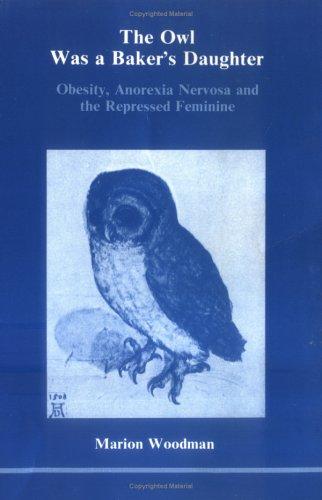
Marion Woodman opens The Owl Was a Baker’s Daughter with a provocation that still unsettles clinical orthodoxy: obesity and anorexia nervosa are not discrete pathologies but “counterpoles of one neurosis.” The neurosis is not about food. It is about the feminine — feared, rejected, and buried alive in a culture that has spent centuries sanctifying spirit while demonizing matter. The obese woman’s binge, Woodman insists, is not mere compulsion; it is a degraded sacramental act. She notes that binges “almost always comprise the ravenous eating of cereals, sweets, and milk products,” then reminds us that “wheaten cakes and honey were the sacrificial food of Dionysus.” The question she poses is breathtaking in its directness: “Is the binge some archaic strata of the psyche demanding reunion with the gods and goddesses of the earth?” This is not metaphor for metaphor’s sake. Woodman is claiming that the symptom contains the cure in encrypted form — that the woman gorging herself at midnight is performing a mystery rite without an altar, a priestess without a temple. The therapeutic task, then, is not to suppress the symptom but to decode its religious grammar. This places Woodman in direct lineage with Jung’s alchemical writings, particularly the Mysterium Coniunctionis, from which she draws the parable of the old king dissolved and reconstituted through water — psyche extracted from matter, then used to “reanimate the ‘dead’ body.” For Woodman, the obese woman’s body is both womb and tomb, and the analytic work is the fire that “puts the fat in the furnace” to produce transformation.
The Positive Father Complex Entombs the Daughter More Surely Than the Negative One
The book’s most counterintuitive clinical insight concerns the father complex. Woodman demonstrates through her three extended case studies — Margaret, Anne, and Katherine — that the woman with a positive father and a negative mother is “doubly unconscious.” The daughter who idealizes her father internalizes his patriarchal values as love itself; she cannot separate from him without experiencing the separation as a betrayal of the only good thing in her life. Her obesity becomes what Woodman calls “the desire to redeem the Father by taking on His darkness without any conscious understanding of what she is doing.” The tragedy is structural: the daughter’s body carries the father’s unlived shadow as literal weight. This formulation anticipates and deepens the complex theory that Edward Edinger would articulate through the ego-Self axis. Where Edinger tracks the inflation and alienation cycle as a general pattern of individuation, Woodman shows how the father-identified woman remains in permanent inflation — swollen not with grandiosity but with someone else’s psychic substance. The “little owl, bewildered and bewitched” of the title (Shakespeare’s Ophelia reference) is a woman who has never owned her distress because she was too busy metabolizing her father’s. Her emancipation requires what Woodman calls “a painful separation from the positive father through a direct confrontation with his darkness” — a crucifixion, not of the ego by the Self, but of the daughter’s identification with paternal goodness.
The Body as Shadow Container: Why Sensation-Inferior Intuitives Somatize What They Cannot Feel
Woodman’s use of Jung’s Association Experiment grounds her mythic amplifications in empirical soil. Her study of twenty obese women reveals a consistent typological finding: “many obese women are intuitives, whose inferior function is sensation.” They are drawn to dream imagery and symbolic meaning but “tend to ignore the body in which the shadow is embedded.” The body becomes the unconscious’s last resort — what cannot be felt is stored as fat, what cannot be lived erupts as cancer. Woodman cites two participants who appeared healthy during the experiment but “have since died from cancer of the female organs,” and quotes Russell Lockhart’s devastating formulation that “cancer lives something of life unlived.” This is not sentimental body-positivity; it is a clinical warning. Woodman is arguing that the intuitive woman’s flight from sensation is itself a repetition of the patriarchal split between spirit and matter. When she asks the therapist, “Can I imagine how it feels to live in a body which I do not experience as my own?” she is naming the core dissociation. Sylvia Brinton Perera’s Descent to the Goddess, which Woodman herself endorsed as “the most significant contribution to an understanding of feminine psychology since Esther Harding,” pursues a parallel track: the feminine must descend into the dark underworld of instinct and body before it can be restored. But where Perera works through Sumerian myth, Woodman works through the flesh itself — the allergies, the wardrobe of dresses sizes 14 through 18, the belt tightening as rage is swallowed.
Christianity’s Unfinished Business: The Assumption of Mary as the Book’s Hidden Spine
The final chapter reveals Woodman’s deepest ambition: to read the dogma of the Assumption of the Virgin Mary — proclaimed by Pius XII in 1950 and celebrated by Jung as perhaps the most important religious event since the Reformation — as the theological key to eating disorders. If the Assumption is, as Jung said, “a sanctification of matter,” then the obese woman’s struggle is nothing less than the individual enactment of Christianity’s unfinished integration of the feminine. Woodman writes that “Eve as ‘temptress’ and Eve as the container of the redemptive seed of consciousness” are one, and that the woman’s task is “her conscious release from the tomb to which her heritage has unconsciously assigned her.” Von Franz, whom Woodman channels throughout the final chapter, had observed that in Christianity “matter was supposed to be ruled by the devil” and the feminine Wisdom of God was eliminated. The cry of the obese woman — her “longing to be delivered from the matter in which she is buried” — is archetypally “the call of the Wisdom of God to be delivered from the gross or unredeemed matter.”
This book matters now not because eating disorders remain epidemic — they do — but because Woodman identified in 1980 what most clinical literature still cannot see: that the body is not the site of the problem but the language of the soul’s protest. No other work in the Jungian canon so precisely maps the intersection of complex theory, typology, somatic symptom, and religious history onto a single clinical population. It is the foundation stone for everything Woodman would later build — Addiction to Perfection, The Pregnant Virgin, The Ravaged Bridegroom — and it remains the most empirically grounded of her books, the one where the owl still has data on her side.
Sources Cited
- Woodman, M. (1980). The Owl Was a Baker's Daughter: Obesity, Anorexia Nervosa and the Repressed Feminine. Inner City Books.
- Jung, C.G. (1904-07). Studies in Word Association. In Collected Works, Vol. 2. Princeton University Press.
- Shakespeare, W. (c. 1601). Hamlet. Act IV, Scene 5.