 Seba.Health
Key Takeaways
- Yalom's therapeutic factors constitute the most rigorous phenomenology of group healing in existence, yet they function precisely by suppressing the vertical axis of depth that Jungian psychology insists is the sine qua non of transformation—making the book both indispensable and a limit case for depth-psychological thinking.
- The deliberate redistribution of transference across multiple group members is not a dilution of therapeutic power, as von Franz and Jung argued, but a lateral architecture of relatedness that trades intrapsychic descent for interpersonal breadth, revealing an unresolved tension at the foundation of all relational psychotherapy.
- Yalom's insistence that the group is a social microcosm inadvertently confirms Neumann's thesis that the individual emerges late from the collective—but Yalom reverses the developmental arrow, using the collective to reconstitute the individual rather than to transcend it.
The Group as Horizontal Temenos: Yalom Builds a Container That Refuses Depth
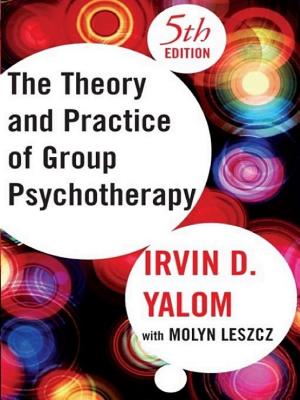
Irvin Yalom’s The Theory and Practice of Group Psychotherapy stands as the definitive text on its subject not because it covers group work comprehensively—though it does—but because it constructs a complete epistemology of healing that operates almost entirely along the horizontal plane of human relationship. Yalom identifies eleven therapeutic factors (interpersonal learning, catharsis, group cohesiveness, existential factors, universality, instillation of hope, altruism, corrective recapitulation of the primary family, socializing techniques, imitative behavior, and the imparting of information) and treats them as the operative agents of change. Each factor is interpersonal, intersubjective, and observable. None requires descent into the unconscious, none invokes the archetypal, and none depends on the kind of vertical interiority that Hillman identified as the primary metaphor of all depth psychology—“the fantasy of hidden depths” that “ensouls the world and fosters imagining ever deeper into things.” Yalom’s temenos is the circle of chairs, not the imaginal underworld. This is not a deficiency; it is a philosophical commitment. The book’s power derives from the consistency with which it maintains that relatedness among persons, conducted in the present tense, is the therapy. There is no hidden gold beneath the floorboards. The floorboards are the gold.
This commitment places Yalom in direct confrontation with the Jungian tradition’s deepest anxieties about group work. Marie-Louise von Franz, channeling Jung’s correspondence, mounted a sustained critique: the group “reinforces the ego” while the Self “is pushed into the background”; transference is diluted rather than metabolized; the unconscious loses its capacity to “time” the constellation of problems. Von Franz was unequivocal—participation in group experience “more often disturbs the individual analysis than helps it.” Her analysand’s dream of being forced to expose his girlfriend to “a dirty old voyeur” encapsulates the Jungian horror at collective exposure: the soul’s intimacy violated by the group gaze. Yalom would not dispute the phenomenology but would reframe the valence. For him, the exposure is therapeutic precisely because it is witnessed by multiple others who are themselves exposed. The corrective emotional experience occurs not in the sealed alchemical vessel of the dyad but in the social microcosm where distorted relational patterns become visible, confrontable, and revisable in real time. What von Franz calls dilution of transference, Yalom calls distribution of relational intensity—and he marshals decades of empirical evidence to argue that this distribution produces measurable, durable change.
Interpersonal Learning Replaces Individuation—At a Cost Jung Predicted
The centerpiece of Yalom’s theoretical architecture is interpersonal learning, which he elaborates through Harry Stack Sullivan’s interpersonal theory and borrows implicitly from object-relations thinking. The group member discovers, through feedback and enactment, the distorted parataxic patterns that govern their relationships. This discovery happens not through introspection but through collision with others. Yalom is explicit: insight in group therapy is interpersonal insight, not genetic or dynamic insight in the classical analytic sense. The patient learns how they affect others and how others affect them, not why in terms of unconscious fantasy or archetypal pattern. This is a deliberate limitation that produces extraordinary clinical results within its own frame—but it is a limitation nonetheless. Erich Neumann’s observation that “in the initial state of affairs the individual was to a large extent integrated through the group” and that “the ego could only free itself very slowly from the tyranny of the group” suggests a developmental trajectory moving away from collective embeddedness toward individual differentiation. Yalom reverses the vector: the alienated, symptomatic modern individual is returned to the group to discover relational competence. The question Neumann’s framework forces upon Yalom’s project is whether this return is progressive or regressive—whether the group reconstitutes a functional ego or merely provides what von Franz called a substitute parent, leaving the member “as infantile and insecure as before.”
Existential Factors as the Unacknowledged Bridge to Depth
Yalom’s most underappreciated contribution is his inclusion of existential factors—death, freedom, isolation, meaninglessness—among the therapeutic agents of the group. Here he breaks his own interpersonal frame. These factors cannot be resolved through feedback or relational correction; they can only be faced. When a group member confronts mortality or groundlessness in the presence of others who share the same condition, something occurs that exceeds Sullivan’s interpersonal psychiatry and approaches what Hillman called “pathologized awareness”—the recognition that affliction is “fundamental to the sense of individuality.” Yalom does not theorize this in archetypal terms, but his clinical vignettes repeatedly show moments where the group drops beneath social learning into shared confrontation with finitude. These are the moments that most closely resemble what Edinger described as “encounter with the greater personality”—experiences where the ego meets something that exceeds its categories. Yalom’s empiricism prevents him from naming this encounter, but his clinical honesty compels him to document it. The existential factors are the crack in the horizontal surface through which the vertical threatens to erupt.
Where the Horizontal and Vertical Must Eventually Meet
David Sedgwick’s effort to articulate the Jungian therapeutic relationship “in a language reasonably free of jargon” finds an unexpected ally in Yalom, whose prose is the clearest in the psychotherapy literature and whose clinical descriptions of group process constitute a masterclass in tracking relational unconscious dynamics without invoking the unconscious by name. For contemporary practitioners navigating between evidence-based group models and depth-psychological traditions, Yalom’s fifth edition remains the essential text—not because it resolves the tension between interpersonal and intrapsychic approaches, but because it embodies that tension with greater clarity and intellectual honesty than any competitor. The book illuminates what group process can achieve with surgical precision, and in doing so, it inadvertently maps exactly where group process stops and the solitary descent into soul must begin. No other text draws that boundary with such authority or such consequence.
Sources Cited
- Yalom, I. D. & Leszcz, M. (2005). The Theory and Practice of Group Psychotherapy (5th ed.). Basic Books. ISBN 978-0-465-09284-0.
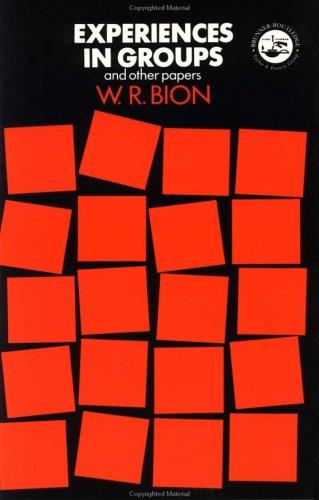
- Bion, W. R. (1961). Experiences in Groups and Other Papers. Tavistock Publications.
- Burlingame, G. M., MacKenzie, K. R., & Strauss, B. (2004). Small-Group Treatment: Evidence for Effectiveness and Mechanisms of Change. In M. J. Lambert (Ed.), Bergin and Garfield's Handbook of Psychotherapy and Behavior Change (5th ed.). Wiley.