Seba.Health
Key Takeaways
- White documents three centuries of American addiction treatment as a repeating cycle of institutional invention, moral panic, commercialization, and collapse — a pattern that reveals recovery culture as inseparable from the broader forces of American social history.
- The book dismantles the myth that addiction treatment evolved in a linear progression toward enlightenment, showing instead that many approaches celebrated as modern innovations are recycled versions of ideas that appeared, failed, and were forgotten in earlier centuries.
- White's central provocation is that America's relationship to addiction is a mirror of its relationship to its own shadow — each generation's treatment methods encoding its deepest assumptions about freedom, will, sin, and the boundaries of the self.
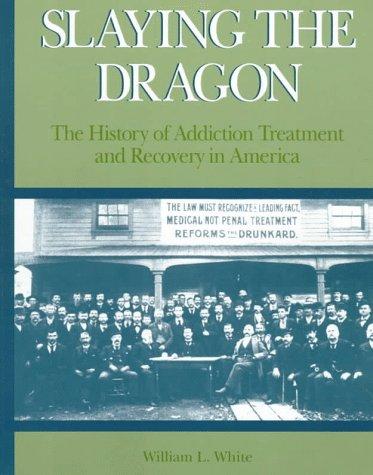
The dragon in the title is not addiction. The dragon is America’s refusal to remember what it has already learned about addiction — the institutional amnesia that ensures each generation reinvents the wheel, often with the same spokes and the same flat tire. William White’s Slaying the Dragon is the most comprehensive history of addiction treatment and recovery ever assembled for the American context, and its central revelation is not any single event or innovation but the pattern itself: a three-hundred-year cycle in which movements of genuine therapeutic insight rise, calcify into commercial enterprises, collapse under the weight of their own contradictions, and are forgotten just thoroughly enough that their successors can repeat the entire sequence without recognizing it.
The Long Arc of American Ambivalence
White begins in colonial America, where habitual drunkenness was understood as a sin to be addressed by the clergy, and traces the slow, contested emergence of the disease concept through Benjamin Rush’s late-eighteenth-century medical writings, the Washingtonian temperance movement of the 1840s, the inebriate asylums of the post-Civil War era, and the catastrophic experiment of Prohibition. Each of these episodes contains the full pattern in miniature. The Washingtonian movement — a mutual-aid society of reformed drunkards that at its height claimed half a million members — anticipated the structure of Alcoholics Anonymous by nearly a century, complete with public testimony, peer support, and the insistence that only a drunkard could understand a drunkard. It collapsed within a decade, consumed by political entanglement and internal disputes about whether the movement should address slavery, women’s rights, and other social causes. AA’s founders, White demonstrates, were unaware of this precedent. The amnesia was total (White, 1998).
The inebriate asylum movement tells the same story at institutional scale. Between 1870 and 1920, over a hundred specialized facilities for the treatment of inebriety opened across the United States, staffed by physicians who published peer-reviewed journals, debated the neurological basis of addiction, and developed treatment protocols that would not look out of place in a contemporary residential program. The movement was destroyed by Prohibition, which rendered its medical framework ideologically inconvenient. When Prohibition ended in 1933, the infrastructure had vanished. The physicians were dead or retired. The journals had ceased publication. The knowledge base was gone. White’s documentation of this erasure is meticulous and damning. American addiction treatment did not progress from ignorance to enlightenment. It achieved enlightenment, forgot it, and started over — repeatedly (White, 1998).
The Commercialization Trap
White is equally precise about the forces that corrupt treatment movements from within. The pattern recurs with mechanical regularity: a genuine therapeutic innovation emerges from the lived experience of people in recovery; it demonstrates effectiveness; it attracts institutional attention and funding; it is professionalized, credentialed, and scaled; the scaling process strips it of the relational qualities that made it work; and the commercial entity that remains trades on the reputation of the original innovation while delivering something fundamentally different. The Minnesota Model — the twenty-eight-day residential treatment program that dominated American addiction treatment from the 1960s through the 1990s — is White’s most detailed case study of this trajectory. Born from the collision of AA principles with the institutional culture of state hospitals, the Minnesota Model produced genuinely transformative outcomes in its early iterations. By the 1980s, it had become a billion-dollar industry, and the economic incentives had reorganized the treatment around insurance reimbursement cycles rather than clinical need. The twenty-eight-day stay was not a therapeutic prescription. It was a billing unit (White, 1998).
This analysis carries implications that extend beyond historical interest. White’s work reveals that the treatment industry’s current crises — the opioid epidemic’s exposure of inadequate infrastructure, the revolving door of thirty-day programs that produce relapse rates indistinguishable from no treatment at all, the tension between medication-assisted approaches and abstinence-based models — are not novel. They are the latest iteration of a pattern so deeply embedded in American culture that it operates below the threshold of conscious recognition.
The Shadow of American Freedom
The deepest layer of White’s history is cultural rather than institutional. America’s relationship to addiction encodes its most conflicted assumptions about the self. A nation founded on the sovereignty of individual will has never resolved the contradiction that addiction presents: here is a condition in which the will is precisely what has failed, in which the individual’s capacity for autonomous choice, the very faculty on which American identity depends, has been compromised at a level the individual cannot reach through effort alone. Each generation’s treatment methods betray its position on this unresolvable tension. The moral model treats the addict as a sinner who has chosen wrongly. The disease model treats the addict as a patient whose biology has betrayed them. The recovery model, the one that actually works, White suggests, treats the addict as a person whose relationship to self and community has been shattered and must be rebuilt through sustained participation in a community organized around mutual vulnerability.
White’s sympathy lies with the mutual-aid tradition, from the Washingtonians through AA to the recovery advocacy movement of the late twentieth century. These movements succeed, he argues, because they address addiction at the level where it actually operates — not in the brain alone, not in the will alone, but in the relational field between persons, in the felt experience of being held and witnessed and valued by others who have undergone the same annihilation. The dragon that White’s title names is not the substance. It is the cultural refusal to let this knowledge accumulate — the insistence on forgetting what has been learned, on treating each generation’s encounter with addiction as unprecedented, on allowing commercial and political forces to overwrite clinical and experiential wisdom with whatever framework serves the current economy.
History as the Precondition for Depth
White’s history functions as essential ground for the recovery field. The clinician who does not know this history is condemned to operate within it unconsciously, recycling approaches whose failure modes are already documented, mistaking institutional momentum for therapeutic validity, and treating the latest pharmacological or behavioral innovation as a breakthrough rather than as the newest turn of a very old wheel. White’s work restores the long view — the recognition that addiction is not a problem to be solved but a permanent feature of the human condition, and that the quality of a society’s response to it reveals the depth of that society’s self-knowledge. The dragon is not slain by any single treatment modality. The dragon is slain by remembering — by refusing the amnesia that allows each generation to repeat the failures of the last while congratulating itself on its originality (White, 1998).
Sources Cited
- White, W.L. (1998). Slaying the Dragon: The History of Addiction Treatment and Recovery in America. Chestnut Health Systems. ISBN 978-0-938475-07-8.
- Kurtz, E. (1979). Not God: A History of Alcoholics Anonymous. Hazelden. ISBN 978-1-56838-078-0.
- Schaberg, W.H. (2019). Writing the Big Book: The Creation of A.A. Central Recovery Press. ISBN 978-1-949481-28-0.