 Seba.Health
Key Takeaways
- Hamaker-Zondag's central contribution is treating tarot not as a divination system or self-help exercise but as a continuous psychological practice—a way of life—that integrates Jungian depth psychology into daily orientation rather than reserving it for crisis moments or spread-based readings.
- The book quietly resolves a tension that runs through the entire tarot literature between fortune-telling and individuation by arguing that the cards function as a living symbolic vocabulary for ongoing self-confrontation, not episodic consultation—positioning tarot closer to active imagination than to divination.
- By grounding her card interpretations in astrological and psychological correspondences simultaneously, Hamaker-Zondag produces a double-lens hermeneutic that neither Pollack's mythological-intuitive approach nor Greer's experiential-journaling method achieves on its own.
Tarot as Sustained Psychological Practice, Not Episodic Consultation
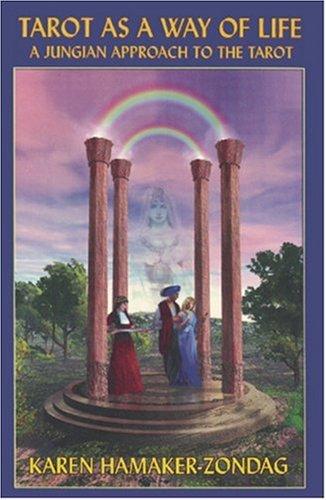
Karen Hamaker-Zondag’s Tarot as a Way of Life (1997) occupies a peculiar and underappreciated position in the tarot literature. Where Rachel Pollack’s Seventy-Eight Degrees of Wisdom treats the Major Arcana as a narrative of spiritual evolution and Mary K. Greer’s Tarot for Your Self builds a workbook pedagogy around self-reading, Hamaker-Zondag does something neither fully attempts: she dissolves the boundary between “doing a reading” and “living a life.” The book’s title is not metaphorical. Its thesis is that the tarot’s archetypal images are not tools you pick up and put down but a symbolic grammar that restructures perception itself once internalized. This is closer to what Jung meant by the transcendent function—a continuous dialogue between conscious and unconscious—than to any model of card-pulling for answers. Hamaker-Zondag’s training as a Jungian analyst and professional astrologer gives her an unusual authority here: she treats the cards as psychic realities, not oracular devices, and insists that their value lies not in what they predict but in what they reveal about the reader’s current relationship to archetypal forces. The distinction sounds subtle but is structurally decisive. It means the spread is not a snapshot but a mirror, and the practice is not consultation but confrontation.
The Double Lens: Astrology and Depth Psychology as Simultaneous Hermeneutics
What distinguishes Hamaker-Zondag’s interpretive method from nearly all her contemporaries is her insistence on reading each card through both a psychological and an astrological lens at the same time. This is not the superficial correspondence-mapping that plagues much esoteric literature—where, say, The Emperor is simply “assigned” to Aries and the analysis stops. Hamaker-Zondag uses planetary and zodiacal associations to illuminate the psychological dynamics already present in the card imagery, creating a stereoscopic depth that neither lens achieves alone. When she interprets a card like The Moon, she moves fluidly between its Piscean resonance—dissolution of boundaries, the oceanic unconscious—and its Jungian valence as the encounter with the shadow’s most formless manifestations. Hajo Banzhaf’s Tarot and the Journey of the Hero performs a similar integration of Jungian thought with card symbolism, but Banzhaf’s primary structural metaphor is the hero’s journey narrative; Hamaker-Zondag’s is the ongoing, non-linear process of individuation. Banzhaf sees the Major Arcana as “archetypal milestones” on a sequential path to wholeness. Hamaker-Zondag sees them as a constellation of energies any one of which may become foreground at any moment. This is a critical difference: it means her system is more clinically realistic, acknowledging that psychological development does not move in a straight line from Fool to World.
The Minor Arcana as the Texture of Daily Psychic Life
One of the book’s most substantive contributions is its treatment of the Minor Arcana not as secondary or merely “practical” cards but as the very fabric of daily psychological experience. Pollack noted in Seventy-Eight Degrees of Wisdom that serious tarot studies almost universally neglect the suit cards, either ignoring them or appending “another set of formulas at the back.” Sallie Nichols’s Jung and Tarot focuses exclusively on the twenty-two trumps, treating the journey through the Major Arcana as the sole path to self-realization. Hamaker-Zondag refuses this hierarchy. For her, the pip cards and court cards are where individuation actually plays out—in relationships, professional struggles, emotional patterns, bodily experiences. The Major Arcana provide the archetypal frame; the Minor Arcana provide the phenomenology. This is not a trivial distinction. It means that a reading composed entirely of minor cards is not impoverished but is, in fact, depicting the lived texture of the psyche’s work. By treating the suits as corresponding to specific psychological functions and relational modes rather than merely to fortune-telling categories (“money,” “love,” “conflict”), Hamaker-Zondag elevates the entire deck to the level of a comprehensive psychological map.
The Court Cards as Sub-Personalities, Not Character Types
Hamaker-Zondag’s handling of the court cards deserves particular attention. Where much of the tradition treats Kings, Queens, Knights, and Pages as external people who will enter the querent’s life—the “dark man disposed to help” that Pollack rightly criticizes—Hamaker-Zondag treats them primarily as sub-personalities within the reader’s own psyche. A Queen of Swords is not someone you will meet; she is a mode of relating to truth, authority, and emotional detachment that is currently activated in your inner world. This move is directly indebted to Jungian complex theory: each court card becomes something like a personified complex, an autonomous partial personality with its own agenda and energy. Greer’s Tarot for Your Self gestures toward this with exercises on “Court Card Roles” and inner masculine and feminine work, but Hamaker-Zondag systematizes it into a coherent interpretive framework. The court cards become the cast of an inner drama, and the reading becomes a stage on which their relationships to each other—and to the reader’s ego-consciousness—can be observed and worked with. This is active imagination by another name.
Why This Book Matters Now
For readers navigating the contemporary tarot landscape—saturated with deck aesthetics, social media spreads, and shallow self-care branding—Hamaker-Zondag’s Tarot as a Way of Life is a corrective of rare precision. It insists that tarot is not a lifestyle accessory but a discipline of self-knowledge requiring the same rigor and honesty that depth psychology demands. It does not romanticize the cards or mystify them; it puts them to work as instruments of psychological differentiation. No other book in the tarot canon so successfully integrates astrological sophistication with Jungian clinical sensibility into a single, practice-oriented framework. Where Jodorowsky’s The Way of Tarot opens the cards to infinite subjective meaning through “fluid symbols,” Hamaker-Zondag constrains interpretation just enough—through psychological and astrological structure—to make it therapeutically useful rather than merely imaginative. The result is a book that functions less as a tarot manual and more as a portable depth-psychological practice, one that remains uniquely equipped to meet the reader who wants not answers from the cards but a sustained encounter with the unconscious through them.
Sources Cited
- Hamaker-Zondag, K. (1997). Tarot as a Way of Life: A Jungian Approach to the Tarot. Samuel Weiser. ISBN 978-0-87728-878-7.
- Jung, C. G. (1968). The Archetypes and the Collective Unconscious (CW 9i). Princeton University Press.
- Nichols, S. (1980). Jung and Tarot: An Archetypal Journey. Samuel Weiser.