 Seba.Health
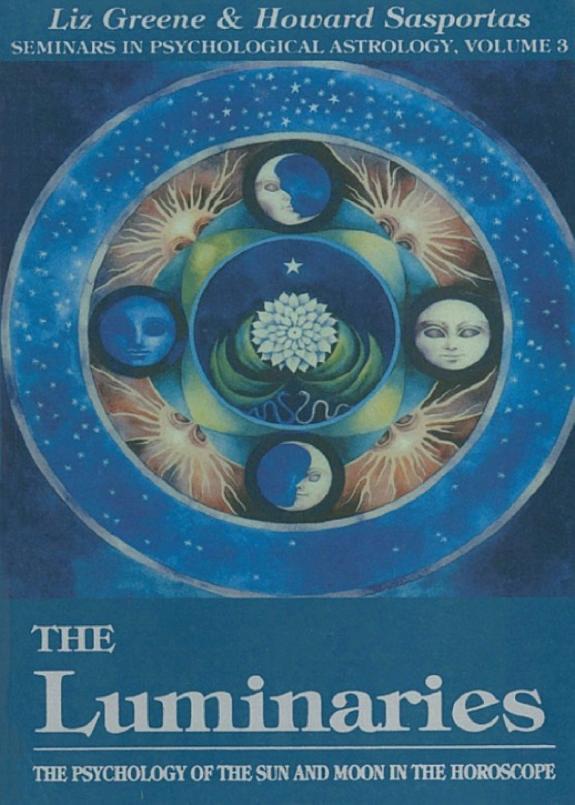
Key Takeaways
- Greene reframes the luminaries as normative developmental arrows rather than descriptive glyphs, converting astrological typology into teleology and locating the ethical distinction between differentiation and dissociation at the book's core.
- Sasportas installs the Moon as the primary significator of intimate relationship, treating the maternal imago as first romance and aligning astrology with the object-relational clinical tradition rather than with conventional Venus-based relationship reading.
- The final synthesis elevates the Ascendant to the role of alchemical alembic containing the solar-lunar coniunctio, furnishing a dynamic mediating structure that is keyed to transits and progressions rather than to a static topography.
The Birth Chart as Developmental Arrow: Greene and Sasportas Replace Typology with Teleology
Greene opens with a deceptively simple etymological move: a luminary is not merely a light but “one who illustrates any subject or instructs mankind.” This reframes the Sun and Moon from descriptive glyphs into normative forces—standards of excellence toward which the personality must grow. “Human beings are born unfinished,” she writes, and the luminaries describe “an arrow which points somewhere, a creative energy which gradually layers flesh onto the bare bones of archetypal patterning.” This is not the Sun-sign astrology of newspaper columns, nor even the character-typology of traditional horoscopy. It is a frankly Jungian developmental psychology that happens to use astrological symbols as its grammar. The echoes of Neumann’s The Origins and History of Consciousness are unmistakable: the solar hero emerging from the body of the primal Great Mother is Neumann’s uroboric stage restated in astrological terms. But Greene goes further than Neumann by insisting that the lunar principle is not merely the matrix from which consciousness escapes; it is itself an instructor whose wisdom must be preserved. The distinction she draws between differentiation and dissociation—solar consciousness that includes the mother-world versus solar consciousness that amputates it—is the book’s ethical backbone and its sharpest diagnostic tool.
The Moon as First Romance: A Clinical Reframing That Challenges Conventional Relationship Astrology
Sasportas’s contribution is less mythological and more clinical, and it carries a provocation that practicing astrologers still resist: the Moon, not Venus, is the primary significator of what happens in intimate relationship. His evidence is experiential rather than statistical—a woman with “beautiful” Venus aspects and an untroubled 7th house who nonetheless attracted violence, because her Moon squared Pluto and was inconjunct both Saturn and Neptune. The logic is psychoanalytic: mother is not just mother but “the first big romance of your life,” and the internal object formed in that bond becomes the template for all subsequent merging. This directly parallels Bowlby’s attachment theory and anticipates the object-relations framework that Greene would later develop more fully. It also resonates with Winnicott’s “good enough mother,” whom Greene explicitly invokes in the introduction. The chart becomes, in Sasportas’s phrase, “like an X-ray” of the inner child—a claim that aligns this book with the trauma-informed depth psychology of writers like van der Kolk, who would later demonstrate how early relational patterns encode themselves in the body. The Moon-Pluto dynamic, where the mother’s “constant smouldering of emotion” breeds “rage and jealousy and an unconscious desire to kill the child,” reads less like astrology and more like a case formulation from Melanie Klein.
The Alchemical Coniunctio as Structural Principle: The Ascendant as Alembic
The book’s final movement—Part Three, “The Coniunctio”—is where Greene and Sasportas synthesize their separate investigations into a unified theory. The Sun incarnates through the Moon: “Solar consciousness is thus not built upon abstract concepts about life, but upon life itself, and experience of life depends upon lunar instinct and emotional contact.” This is not a platitude but a structural claim about how identity forms. The progressed Moon’s 28-year cycle becomes the mechanism by which the lunar principle ventures out, gathers experience, and returns to the Sun for processing—a rhythm Greene compares to the alchemical opus, “full of crisis and conflict.” The most original structural insight is the elevation of the Ascendant to the role of the alchemical flask, the container within which Sun and Moon can be reconciled. Greene notes that the Ascendant “presents us with an enormous dilemma, for it is very hard to internalise its meaning,” and that “life keeps hitting us over the head with Ascendant issues.” This is functionally equivalent to Edinger’s ego-Self axis in Ego and Archetype—a mediating structure that holds the tension of opposites—but Greene’s version is more dynamic because it is keyed to the biographical rhythm of transits and progressions rather than to a static topography. Sasportas adds that Mercury, which Jung associated with the transcendent function, also participates in this bridging, a suggestion that deserves far more elaboration than the seminar format allowed.
Why Dissociation, Not Integration, Is the Modern Danger
Greene’s cultural diagnosis is bracingly specific. Western civilization has achieved “remarkable social and technological advances” through solar differentiation from the Great Mother, but “perhaps we have gone too far, at the expense of heart and instinct.” The ecological crisis is reframed as a mythic dissociation: “where we were once at her mercy, now she is at ours—and so too are our bodies and our planet.” This is not environmentalist sentimentality; it is the same argument Hillman makes in Re-Visioning Psychology about the tyranny of the heroic ego, except Greene locates the corrective not in a pluralistic imaginal psychology but in the restoration of the lunar principle within individual lives. Jung’s dictum—“if there is something wrong with society, there is something wrong with the individual; and if there is something wrong with the individual, there is something wrong with me”—serves as the pivot. The personal chart becomes the site where the collective dissociation can be addressed, one coniunctio at a time.
This book matters today because it provides what no purely Jungian text and no purely astrological text offers alone: a developmental framework in which the tension between belonging and becoming—between the body’s mortal wisdom and the ego’s hunger for meaning—is mapped onto a symbolic system that is simultaneously personal and archetypal. For anyone working with clients in depth psychological practice, the distinction between differentiation and dissociation from the maternal matrix is not theoretical decoration; it is the difference between individuation and narcissistic inflation. Greene and Sasportas made that distinction operational.
Sources Cited
- Greene, Liz; Sasportas, Howard (1992). The Luminaries: The Psychology of the Sun and Moon in the Horoscope.