 Seba.Health
Key Takeaways
- Campbell's late lectures reveal that his comparative method was never primarily taxonomic but pharmacological: myth functions as a psychophysiological recalibration device that restores the organism's felt participation in the cosmos, and this book traces the shifting dosage forms across cultures and centuries.
- The Bastian distinction between Elementargedanken and Völkergedanken, which Campbell foregrounds as his organizing principle, operates as a depth-psychological hermeneutic that parallels Jung's archetype-versus-complex schema but refuses to subordinate the ethnic image to the universal, insisting both are needed for myth to be therapeutically alive.
- The Arthurian and Grail chapters do not merely retell medieval romance but argue that the European twelfth century constitutes a psychological mutation—the birth of individual spiritual authority against collective religious mandate—making the Grail quest the West's indigenous individuation narrative.
Myth Is Not Belief but Biological Attunement: Campbell’s Late Somatic Theory of Mythological Function
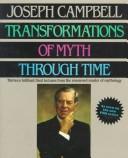
Campbell opens Transformations of Myth Through Time with a claim that would be easy to skim past but that anchors the entire book: “The material of myth is the material of our life, the material of our body, and the material of our environment.” This is not decorative language. By the time of these late lectures, Campbell had moved decisively beyond the structuralist cataloguing of The Masks of God toward a position that myth is, at root, a technology for restoring somatic coherence between the human organism and its environment. The mother-child dyad is his first image not because it is sentimental but because participation mystique—Lévy-Bruhl’s term, which Campbell borrows without apology—names an embodied state, not a cognitive proposition. The “principal function of mythology” is “getting into harmony and tune with the universe and staying there.” This is closer to the regulatory language of Allan Schore’s affect regulation theory or Stephen Porges’s polyvagal framework than to anything in Frazer or Lévi-Strauss. Campbell’s “Wisdom Body”—the body that knows what to do before the head has caught up—prefigures the somatic turn in contemporary trauma studies by positioning mythic imagery as the mother tongue of a pre-verbal intelligence that the rational mind can only imperfectly translate. Bessel van der Kolk’s dictum that “the body keeps the score” finds an unexpected ancestor here: Campbell argues that dream, vision, and myth all emerge from the same biological substrate, and that the perennial philosophy is nothing other than the systematic interpretation of what the body already knows.
The Bastian Framework as a Diagnostic for Cultural Pathology
The spine of these lectures is Adolf Bastian’s distinction between Elementary Ideas (Elementargedanken) and Folk Ideas (Völkergedanken), which Campbell deploys not as an academic taxonomy but as a clinical instrument. When a culture’s Folk Ideas no longer adequately clothe the Elementary Ideas—when the local costume no longer transmits the universal charge—mythology dies into mere ideology, and the population suffers what Campbell elsewhere calls a “Waste Land” condition. This is the same diagnostic framework that runs through Occidental Mythology, where Campbell identifies the fourth function of myth as initiating “the individual into the order of realities of his own psyche, guiding him toward his own spiritual enrichment and realization.” In Transformations, he applies this diagnosis diachronically, tracking the Elementary Ideas as they pass through Paleolithic cave ritual, Neolithic goddess worship, Egyptian and Indian philosophy, Buddhist meditation technology, and finally the European Grail romances. The lectures on Kundalini yoga are particularly revealing: Campbell reads the chakra system not as esoteric anatomy but as a map of psychological development from instinctual (pelvic) consciousness through the heart’s awakening of compassion to the transpersonal apertures of the upper centers. This maps directly onto the Jungian individuation trajectory—ego consolidation, shadow integration, anima/animus encounter, Self-realization—though Campbell never names Jung’s stages explicitly. The convergence is structural, not citational, and it is what makes these lectures indispensable to anyone reading Jung’s Psychological Types or Edinger’s Ego and Archetype and wanting to see the same developmental logic articulated through non-Western symbol systems.
The Grail as the West’s Indigenous Individuation Myth
The final three lectures—on the Arthurian legends, Tristan and Isolde, and Parzival—constitute the book’s real payload. Campbell traces Arthur from a Celtic bear-deity worshipped in the Pyrenees through the Roman syncretic period to the historical war-leader of post-Roman Britain and finally to the literary figure of the twelfth-century romances. This is not antiquarianism. Campbell’s argument is that the Grail romances represent a genuine psychological mutation in Western consciousness: the emergence of individual spiritual authority over and against the collective mandate of Church doctrine. The Grail is “that fountain in the center of the universe from which the energies of eternity pour into the world of time. It’s in each of our hearts, that same energy.” The quest for the Grail is therefore not obedience to an external god but descent into one’s own interiority—a move Campbell explicitly contrasts with the tribal mythology of the Abrahamic traditions, where “Moses is not the hero. The tribe is the hero.” His sharp exchange with Martin Buber—“How do you distinguish between a divine and a diabolical invitation?”—crystallizes the central tension: mythologies that ground authority in collective election versus mythologies that locate the sacred in individual experience. This is the same fault line that animates Creative Mythology, where Campbell declares that “the individual has had an experience of his own—of order, horror, beauty, or even mere exhilaration—which he seeks to communicate through signs.” The Grail romances are the first fully realized instance of this creative mythology in European literature, and Campbell reads them as the Western psyche’s answer to the kundalini ascent: a path from unconscious participation in collective forms to conscious, individual realization.
The Syncretic Eye Versus the Tribal Eye: Campbell’s Most Consequential Distinction
Running beneath every lecture is a distinction Campbell states plainly but whose implications are enormous: the difference between syncretic and exclusive mythological orientations. The Greeks and Romans “could see that the gods of other people were the same gods they worshiped, because those gods are personifications of the energies that shape and maintain the universe.” The desert monotheisms could not: “you could not possibly say, ‘He whom you call Ashur we call Yahweh.’” This is not a neutral observation. Campbell is diagnosing a pathology of mythological literalism—taking the Folk Idea for the Elementary Idea, mistaking the costume for the energy it clothes. This diagnostic runs parallel to James Hillman’s critique of monotheistic psychology in Re-Visioning Psychology, where the insistence on a single authoritative perspective produces what Hillman calls “monotheism of consciousness.” Campbell and Hillman arrive at the same prescription from opposite directions: Campbell through comparative mythology, Hillman through archetypal psychology. Both argue that psychological health requires polyvalent seeing—the capacity to recognize multiple valid masks of the same transpersonal energy.
For readers encountering depth psychology today, Transformations of Myth Through Time does something no other single volume achieves: it provides the entire mythological backstory that Jung, Hillman, and Edinger presuppose but never narrate. It is the panoramic lens through which the archetypal images discussed in clinical depth psychology can be seen in their original habitat—ritual, art, landscape, body. Without this book, the archetypes remain concepts. With it, they become what they always were: living powers coursing through specific cultural vessels, demanding not belief but attunement.
Sources Cited
- Campbell, Joseph (1990). Transformations of Myth Through Time.