 Seba.Health
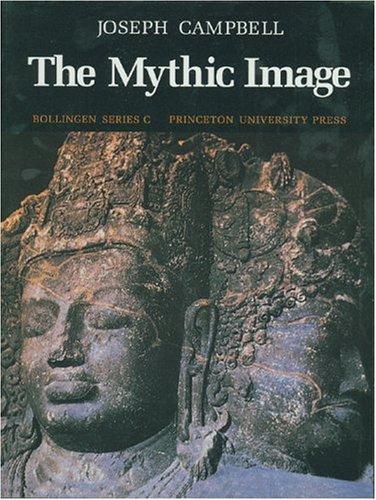
Key Takeaways
- The Mythic Image is not a survey of world mythology but an attempt to construct a world epic in the modality of dream itself — a text whose organizational logic is oneiric rather than argumentative, making it the structural foundation from which all of Campbell's other works function as extended footnotes.
- Campbell's deliberate exclusion of non-literate "primitive" mythologies is not an oversight but a precise methodological choice: the book treats myth as an artifact of literate civilizations precisely because only written traditions generate the layered, reflexive, image-text relationship that mirrors the dream's own self-interpreting structure.
- The book's real thesis is not comparative mythology but a metaphysics of consciousness: the Vedantic proposition that the world is literally a dream dreamed by a single being operates not as metaphor but as the governing epistemology through which every image in the volume must be read.
The Mythic Image Is Not a Book About Myths but a Text Written as Dream
Campbell’s preface announces what most readers skim past: “Pictures invite the eye not to rush along, but to rest a while and dwell with them in enjoyment of their revelation.” This is not decorative piety. The entire architecture of The Mythic Image enacts the condition it describes. Where The Hero with a Thousand Faces traced a narrative arc — departure, initiation, return — and The Masks of God proceeded historically through four volumes of cultural analysis, The Mythic Image refuses both narrative and historical logic. Its six chapters unfold like the stages of sleep itself: from “The World as Dream” through cosmic order, symbolic botany, yogic transformation, sacrificial death, and finally “The Waking.” As Charles H. Long observed in his penetrating review, the text is “enveloped” by sleep — Vishnu floating on the Milky Ocean of cosmic potentiality opens the work, and Schopenhauer’s vision of “a vast dream, dreamed by a single being, in such a way that all the dream characters dream too” closes it. Campbell is not illustrating dream imagery; he is constructing a text that operates by oneiric logic, where “what is not-A may indeed be A.” This is why the book resists sequential reading and why Campbell explicitly designed it so that “the reader might enter into its pages at any turn he liked.” The passive, kaleidoscopic encounter with nearly 450 images is itself the method — the reader is placed in the position of the dreamer encountering mythic forms before rational interpretation can intercede. James Hillman’s insistence in The Dream and the Underworld that dreams must not be translated upward into dayworld categories finds a strange structural ally here: Campbell built a book that resists such translation by design.
Campbell’s Exclusion of Primitive Mythology Is the Book’s Most Radical Theoretical Gesture
Long noted with precision that Campbell consciously eliminated non-literate folk traditions from this study’s primary scope, setting apart “two orders of myth” in Chapter II — the “comparatively simple” oral folk traditions and “the infinitely more complex” literate civilizations culminating in Buddhism, Christianity, and Islam. This is not scholarly elitism. It is a decision about the relationship between writing and dreaming. Campbell understood that the mythic image — as distinct from the mythic narrative — achieves its full reflexive power only in civilizations that possess visual and textual traditions capable of layering image upon image across millennia. The Warka Vase from third-millennium Sumer, the Great Sun Buddha of Daigoji, Velázquez, van Gogh — these are not illustrations of myths but crystallizations of dream-logic in material form, and they require the institutional memory of literate culture to accumulate their resonance. This move distinguishes Campbell sharply from Mircea Eliade, whose Patterns in Comparative Religion and History of Religious Ideas treat myth as fundamentally revelatory of ontology across all cultural strata, including the “primitive.” Campbell’s coolness toward Eliade, as Long observed, stems from this precise divergence: Eliade locates myth’s power in its capacity to disclose sacred time regardless of cultural complexity, while Campbell in The Mythic Image locates it in the capacity of literate civilizations to generate self-interpreting symbolic systems — images that dream further images. The book is closer to what Long calls “an oneiric epic,” a genre requiring the accumulated weight of written tradition the way the Mahabharata requires the genealogical depth of kinship structures.
The Yogic Chapter Is the Climax Because Psychology and Metaphysics Become Indistinguishable
Campbell himself declared Chapter IV, “Transformations of the Inner Light,” to be “the climax of the book.” This is where the Kundalini yoga system — with its ascending lotuses from muladhara to sahasrara — provides the interpretive key for both Oriental and Occidental symbolic forms. Campbell illuminates these pages with European masterworks alongside Indian and Asian art precisely to demonstrate that the psychological reading of mythology through yoga is not culturally bound but universally operative. The serpent power ascending through the chakras is the same energy that the alchemical vas hermeticum seeks to transform, the same force that Dante traces through Purgatorio, the same awakening that Eckhart and the Rhineland mystics describe as the birth of God in the soul. This is Campbell’s version of what he elsewhere calls “creative mythology” — the point at which the individual’s experience of order, horror, or beauty generates symbols with “the value and force of living myth.” The chapter functions as the book’s keystone because it collapses the distinction between psychology and metaphysics: the chakras are simultaneously descriptions of psychophysiological states and cosmological principles. Jung’s notion of active imagination — which Campbell explicitly endorsed as “a technique for fathoming one’s own creative depths” by proposing a mythic image for contemplation — finds its fullest cartography here. Where Jung mapped the psyche through alchemical stages and Hillman insisted on the autonomous reality of images in Re-Visioning Psychology, Campbell shows that the great literate civilizations had already systematized these cartographies in their temple iconography and yogic manuals.
The Waking Is Not Resolution but Paradox
The final chapter refuses closure. “The Waking” does not deliver the reader from the dream into daylight clarity. Instead, it deepens the paradox announced at the outset: the awakened one discovers that waking life is itself the dream of a dreamer who is also dreaming. Campbell quotes the Kalahari Bushman — “There is a dream dreaming us” — and pairs it with Schopenhauer to create a frame in which no privileged waking position exists from which to interpret the dream. This is structurally identical to the Buddhist realization Campbell stages throughout the book: that the dreamer, the dream, and the awakening are not three but one. The sacrificial chapter preceding “The Waking” — with its treatment of the willing victim from Aztec blood sacrifice to the Crucifixion — is the necessary passage through death that the mythic hero must undergo before the paradox of waking-within-dreaming can be sustained. The sacrifice is what dissolves the ego that would claim to stand outside the dream as its interpreter.
For readers encountering depth psychology today, The Mythic Image accomplishes something no other work in the tradition attempts: it does not argue for the reality of the psyche’s image-making power — it performs it. Where Hillman theorized the autonomy of the image and Jung described active imagination as technique, Campbell built a 500-page environment in which the reader’s encounter with nearly five millennia of sacred art enacts the very process of mythic dreaming. The book is not a reference work. It is an initiation — the only one in Campbell’s oeuvre that trusts the image more than the word.
Sources Cited
- Campbell, Joseph (1974). The Mythic Image.