 Seba.Health
Key Takeaways
- Onians demonstrates through exhaustive philological evidence that the Greeks located thought, emotion, and life-force in specific organs — the lungs, diaphragm, and heart — not as metaphor but as literal physiology.
- Thumos is etymologically and functionally tied to breath and the respiratory system, making it a proto-interoceptive concept that links feeling to autonomic bodily processes.
- The book provides the foundational evidence that Western psychological vocabulary originated in bodily sensation before being abstracted into mental categories.
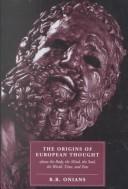
There are books that settle arguments and books that reframe the terms in which arguments can be conducted. Richard Broxton Onians’s The Origins of European Thought is the second kind. Published in 1951 and largely ignored by mainstream philosophy ever since, it remains the single most comprehensive philological study of how the ancient Greeks understood the relationship between body, mind, soul, and world. Onians spent decades tracing the etymological roots of psychological vocabulary across Greek, Latin, and other Indo-European languages, and what he found demolishes the assumption that the ancients used body language as metaphor for mental events. They did not. When Homer says that thumos rises in the chest, he is describing physiology. The metaphor came later, when the body was demoted from the site of knowing to a mere vehicle for the mind.
Thumos as Breath-Soul
The centerpiece of Onians’s contribution, and the finding most consequential for depth psychology, is his analysis of thumos. Through meticulous tracking of usage across the Homeric corpus, the pre-Socratics, and the medical writers, Onians demonstrates that thumos derives from the Indo-European root meaning “to smoke” or “to breathe” and that its original referent was the breath-substance located in the lungs and chest cavity. Thumos is not an abstraction. It is the warm, moist air that fills the lungs, rises in states of emotional arousal, and departs the body at death. When Homeric heroes feel their thumos stirring, they are describing a respiratory event — an increase in breathing rate, a flooding of warmth in the chest, a felt shift in autonomic state that carries evaluative meaning.
This finding recasts the entire discussion of Homeric psychology. Thumos as breath-soul is thumos as interoceptive signal. The chest sensations that Onians identifies as the referent of thumos correspond precisely to what contemporary affective neuroscience maps as interoceptive awareness: the brain’s registration of internal bodily states via afferent pathways from the heart, lungs, and gut. The Greeks did not need the insula or the vagus nerve to build a psychology of embodied feeling. They had the vocabulary for it already, forged in the furnace of direct somatic experience and preserved in the precision of their language.
The Phrenes and the Architecture of Feeling
Onians’s analysis extends beyond thumos to the full range of Greek psychic organs, and the picture that emerges is one of extraordinary sophistication. The phrenes, usually translated as “mind” or “wits”, are located by Onians in the lungs or the diaphragm, the muscular membrane that separates the chest cavity from the abdomen. The phrenes register not abstract thought but the quality of breath: when the phrenes are “dense” or “dark,” the individual’s breathing is constricted, the felt sense is one of heaviness and impaired judgment. When the phrenes are “clear,” breathing flows freely and perception sharpens. The ancient medical writers confirmed this connection, treating diseases of the phrenes (phrenitis) as conditions affecting both respiration and cognition simultaneously.
The heart (kradie, ker) functions in Onians’s account as the organ of courage and endurance, the seat of what a person can bear. The noos, the closest Homeric approximation to “intellect”, Onians traces to visual perception and the capacity for lucid recognition, a function closer to intuitive apprehension than to discursive reasoning. Each organ contributes its register to the total field of experience, and the result is a psychology that is simultaneously a physiology: to think differently is to breathe differently, to feel differently is to occupy a different bodily state.
The Body Before the Mind-Body Problem
The deepest implication of Onians’s work is epistemological. If the Greeks built their psychological vocabulary on bodily experience, then the so-called mind-body problem is not a timeless philosophical puzzle but a historical artifact — a consequence of the progressive abstraction of mental categories away from their somatic origins. Plato’s distinction between the rational soul and the appetitive body, Descartes’s res cogitans and res extensa, the cognitive revolution’s computational model of mind: each of these represents a further step away from the embodied ground that Onians documents in Homer.
Depth psychology has always sensed this. Jung’s feeling function — the evaluative capacity that assigns worth and significance to experience — is precisely the kind of intelligence that Onians locates in the chest organs of Homeric characters. It is not rational in the Platonic sense. It does not operate by logical deduction. It registers the meaning of a situation through a shift in bodily state, a felt sense that arrives before articulation and that establishes the ground from which articulation becomes possible. The therapeutic task of developing the feeling function is, in Onians’s terms, a recovery of phrenic intelligence — a return to the mode of knowing that operates through breath, cardiac rhythm, and visceral registration rather than through conceptual abstraction.
The Scholarly Foundation That Refuses to Go Away
Onians wrote for classicists, and classicists have largely absorbed his findings without acknowledging their radical implications. The philological evidence is unassailable: no serious scholar disputes that thumos refers to breath-substance or that the phrenes designate the lungs-diaphragm region. What remains contested — or more accurately, unexplored — is what that evidence means for the contemporary study of mind. If the foundational vocabulary of Western psychology was built on interoceptive experience, then the recovery of interoceptive awareness in clinical settings is not a therapeutic novelty but a return to first principles. The body was the original instrument of knowing. Onians proves it with six hundred pages of philological precision, and the proof has been sitting in university libraries for seventy-five years, waiting for a discipline willing to take it seriously.
Sources Cited
- Onians, R. B. (1951). The Origins of European Thought: About the Body, the Mind, the Soul, the World, Time and Fate. Cambridge University Press. ISBN 978-0-521-34794-5.
- Snell, B. (1953). The Discovery of the Mind: The Greek Origins of European Thought. Harvard University Press.
- Homer. (2023). The Iliad (E. Wilson, Trans.). W. W. Norton.