Seba.Health
Key Takeaways
- Wilson's Odyssey — the first English translation by a woman — strips away centuries of heroic inflation to reveal Odysseus as a figure defined by cunning endurance rather than martial glory.
- The nostos (homecoming) functions as a psychological archetype: the return to oneself after prolonged exile from one's own ground.
- Odysseus embodies metis, the intelligence of the body under pressure — a form of knowing that depth psychology recognizes in the feeling function.
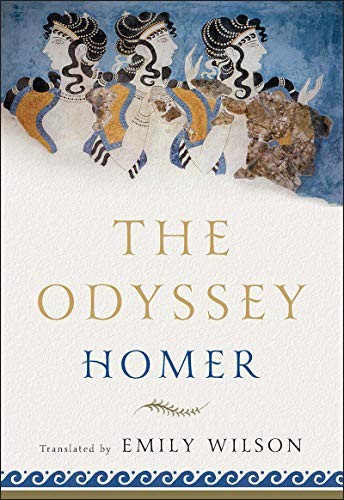
The first word of the Odyssey in Greek is andra — man. Emily Wilson’s opening line, “Tell me about a complicated man,” became the most discussed sentence in classical translation in a generation, and for good reason. It announces that this Odysseus will not be the bronze-age superhero of Victorian reception. He will be complicated: devious, suffering, resourceful, cruel, homesick, and irreducibly human. Wilson’s translation, the first rendering of the complete Odyssey into English by a woman, is a correction of centuries of interpretive distortion that inflated Odysseus into a figure of uncomplicated heroism he was never meant to be.
The Nostos as Psychological Return
The plot of the Odyssey is a homecoming, but the word Homer uses, nostos, carries weight that “homecoming” in English does not fully bear. Nostos is the ache of return, the pull toward origin, the knowledge that one has been away from oneself for too long. Odysseus spends ten years trying to get back to Ithaca, but the poem makes clear that the obstacles are as much psychological as geographical. Each island, each enchantment, each detention represents a way of being stuck: in pleasure (Calypso), in oblivion (the Lotus Eaters), in regression (Circe’s transformations). The nostos is a psychological journey as much as a nautical one, and what Odysseus must recover is not just his kingdom but his capacity to be fully present in his own life.
This is the structure that depth psychology would later formalize as individuation: the long return to oneself through encounters with figures and forces that threaten to dissolve the personality. Homer mapped it first, three thousand years before Jung gave it a clinical name.
Metis: The Intelligence of the Body
Odysseus is not Achilles. Where Achilles is defined by thumos, the organ of passionate intensity, Odysseus is defined by metis, the cunning intelligence that Marcel Detienne and Jean-Pierre Vernant describe as the knowledge of the right moment, the capacity to adapt, to wait, to read the situation with the whole body rather than the deliberating mind alone (Detienne & Vernant, 1978). Metis is not deception for its own sake. It is the intelligence of survival under conditions that do not reward direct confrontation.
Wilson’s translation recovers this quality without romanticizing it. Her Odysseus lies, manipulates, and endures. He is not always admirable. But he is always awake to what the moment demands, and that quality of embodied attentiveness is precisely what the depth psychological tradition would later recognize as the feeling function operating under pressure.
Sources Cited
- Homer. (2017). The Odyssey (E. Wilson, Trans.). W. W. Norton. ISBN 978-0-393-35625-0.
- Pucci, P. (1987). Odysseus Polutropos: Intertextual Readings in the Odyssey and the Iliad. Cornell University Press.
- Detienne, M., & Vernant, J.-P. (1978). Cunning Intelligence in Greek Culture and Society. University of Chicago Press.